
How to Build a 30-Day Social Media Calendar in One Afternoon
Most small businesses spend weeks wrestling with social media planning, juggling spreadsheets and staring at blank screens. With a structured approach, you can map out a full month of content, complete with captions, formats, and posting times, in a single afternoon. This guide walks you through a proven framework: mapping your content pillars, batch-creating assets with AI, organizing everything in a management calendar, and launching with confidence.
Map Your Content Pillars Before You Publish
Identify 3-5 core themes your audience cares about
Content pillars are foundational themes that anchor your brand voice and keep posting consistent. Rather than randomly generating ideas, pillars give you a framework that speeds up decision-making and ensures every post serves your audience’s needs.
Start by asking: What does my audience want to learn from my brand? For a SaaS company, this might include product updates, customer success stories, industry insights, behind-the-scenes content, and educational tips. A fitness brand might focus on workout routines, nutrition guidance, and transformation stories. A marketing agency could center on case studies, strategy breakdowns, and actionable how-tos. Choose themes that feel authentic to your brand and genuinely valuable to followers.
Distribute themes across 30 days to avoid repetition
Once you’ve identified your pillars, assign 2-3 posts per pillar across the calendar. If you have five pillars and 25 planned posts, aim for roughly five posts per pillar. Stagger them throughout the month so Monday features a customer win, Wednesday brings industry insights, and Friday shares educational content. This foundation eliminates the “what should we post?” paralysis and keeps your team aligned.
Choose Your Content Formats and Batch Create with AI
Decide on a format mix that matches platform and audience
Not every platform rewards the same content type. Instagram favors carousel posts and Reels, LinkedIn performs well with long-form insights, TikTok demands short-form video, and Facebook suits community-driven content. A balanced strategy maximizes reach and prevents feed fatigue.

Photo by Quixess Social
Consider 40% carousel posts (educational, step-by-step content), 30% short-form video (behind-the-scenes, quick tips), 20% educational static posts (infographics), and 10% community engagement (polls, questions). Adjust these percentages based on your analytics and audience behavior.
Use AI-powered content creation to eliminate blank-page paralysis
Blank pages are creativity killers. AI-powered tools generate captions, video scripts, carousel outlines, and post ideas in minutes. Batch creating all content at once reduces context switching and keeps your brand voice consistent. Tools like Quixess Social‘s Content Studio generate multiple options quickly, allowing you to cut creation time by up to 70%. You’re reviewing and customizing every piece of output to ensure it reflects your brand personality. Repurposing content with AI becomes second nature once you establish this rhythm.
Schedule and Organize with a Social Media Management Calendar
Visualize all 30 days in one view to spot gaps and overlaps
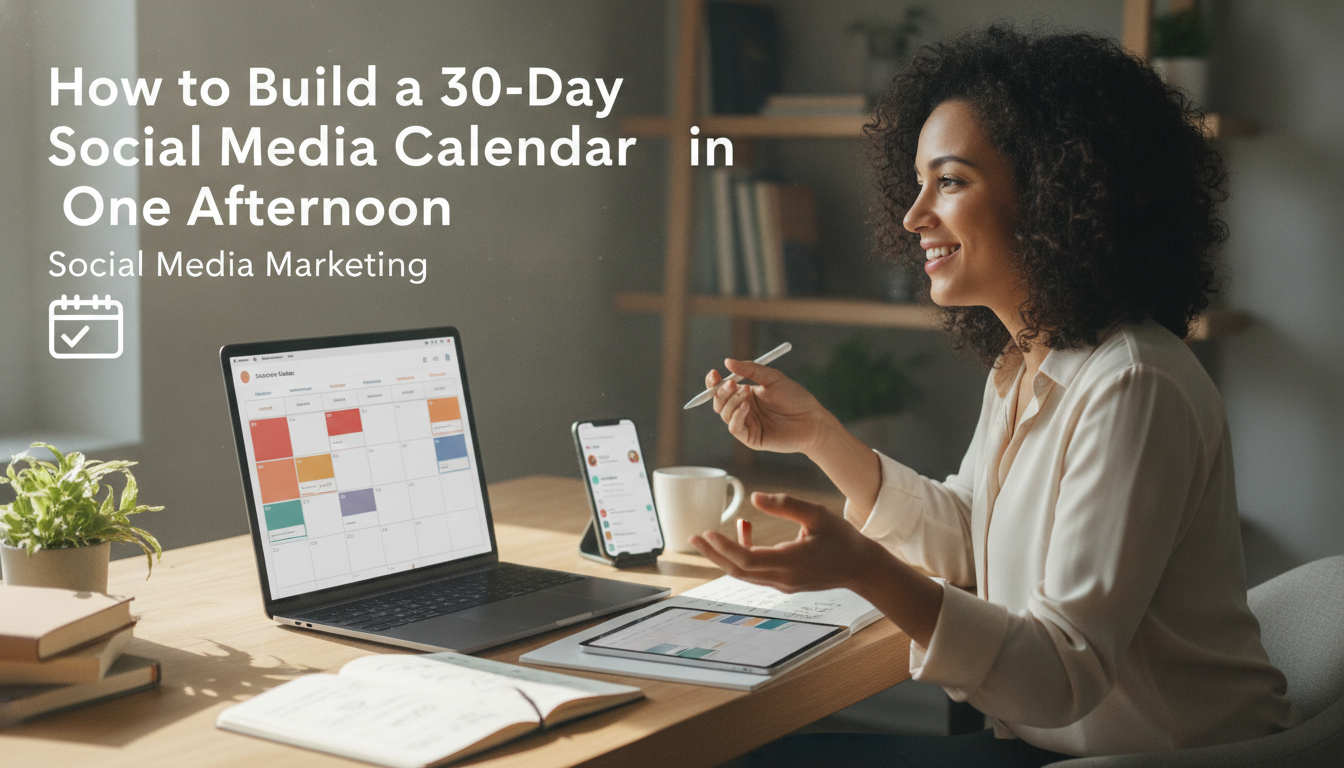
A spreadsheet or dedicated calendar tool transforms abstract ideas into a tangible roadmap. When you see all 30 days simultaneously, patterns emerge instantly. You’ll spot if Tuesday is dominated by product announcements while Wednesday sits empty, or if you’ve accidentally scheduled three educational posts in a row. Color-coding by pillar or format makes validation instant and prevents topic clustering.
Build in flexibility for real-time content and community response
Reserve 20-25% of your calendar as buffer capacity for reactive content. Trends emerge mid-week. Customers ask thoughtful questions. Industry news breaks that’s relevant to your niche. A rigid calendar leaves no room to capitalize on these moments, moments that generate the highest engagement.
Implement a simple approval workflow: creator drafts content, an approver reviews for brand consistency, then a scheduler publishes. Assign one team member to monitor comments daily; unanswered comments cost more than bad posts. Schedule posts using optimal posting times aligned with your audience’s timezone and platform analytics for maximum visibility.
Execute and Refine: The 30-Day Launch Rhythm
Set up monitoring and approval processes before day one
Before launching, establish who watches for technical glitches and messaging errors in the first 48 hours. Assign one dedicated person to respond to comments daily, this role is non-negotiable because conversation builds community and drives sales.

Photo by Quixess Social
Quixess Social consolidates scheduling, publishing, analytics, and conversations in one unified dashboard, eliminating tool-switching friction and ensuring nothing falls through the cracks during those crucial first two weeks.
Track performance to inform the next 30-day cycle
After day 30, extract performance data for each content pillar, format, and posting time. Which pillar generated the most saves, shares, or clicks? Which format consistently outperformed others? Did morning posts hit harder than afternoon posts? Document these patterns instead of starting from scratch with cycle two.
Let performance insights guide your second calendar. The best time to post is your audience’s time, not yours, and your analytics prove exactly when that window opens. Each month’s calendar becomes smarter than the last.
Conclusion
Building a 30-day social media calendar in one focused afternoon is achievable when you follow this structured approach: define content pillars, batch-create assets with AI, schedule everything at once, and reserve space for real-time responsiveness. Consistency, format variety, and strategic scheduling transform social media from daily scrambling into a manageable rhythm. Start with this framework, track what works, and let your analytics guide the next cycle. Begin mapping your 30 days today and watch how planning in bulk liberates your team to focus on genuine audience engagement.